Badminton exercises
at home using dumbbells.
A little space. A steady routine.
Support your time on court with controlled strength work between sessions.
By Western Badminton ·
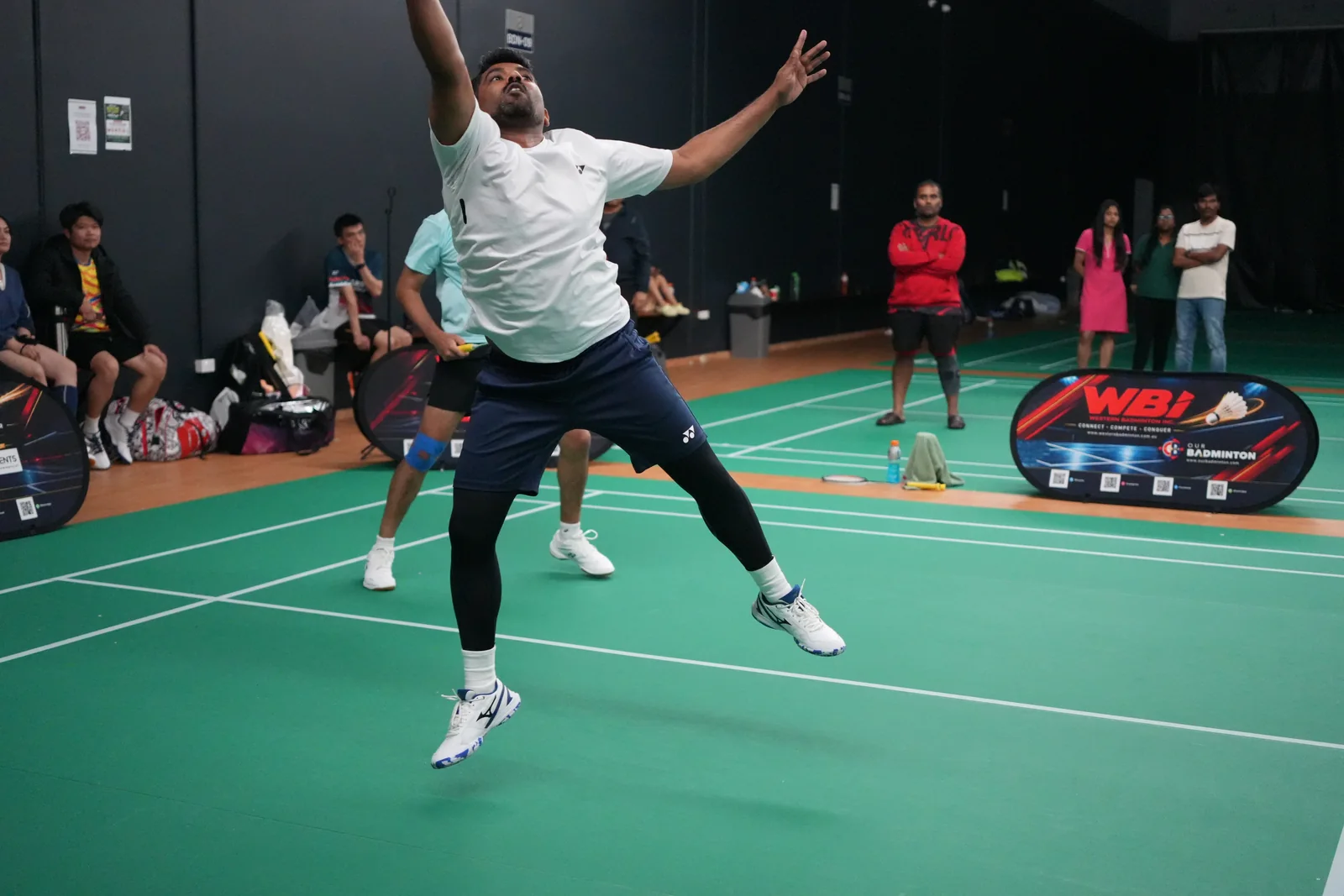
Looking for badminton exercises you can do at home using dumbbells? Start with a few familiar strength movements—not an overhead smash with a weight in your hand. Squats, hip hinges and rows train different muscle groups and can form part of your off-court conditioning.
This guide is for generally healthy adults. It is not a rehabilitation programme or a complete fitness plan, and it does not promise a faster smash or injury prevention. Strength work complements footwork practice, coaching and time with a racket.
Learn the movement before adding load. If you are new to weights, ask a qualified trainer to check your form. Speak with a healthcare professional first if you have an injury, a chronic condition or concerns about exercising.
Make room for good movement.
No elaborate home gym needed. A safe setup comes first.
- Clear your space. Use a level, non-slip surface, secure footwear and weights you can safely pick up and put down. Keep children, pets and loose items away.
- Start light. Choose a load you can control throughout the movement. Warm up with a few minutes of brisk walking or marching, then rehearse without weights.
- Breathe and move steadily. Avoid holding your breath, jerking the weights or chasing a repetition count after your form changes.
- Stop if something feels wrong. Pain or dizziness is a reason to stop, not push through. Seek appropriate advice if symptoms persist.
General preparation and recovery guidance: Mayo Clinic’s introduction to strength training.
Three movements. Control first.
Read each setup before lifting. Use the linked demonstrations if the movement is unfamiliar.
1. Goblet squat
Focus: thighs and glutes.
- Stand with feet around hip-to-shoulder width. Hold one light dumbbell securely with both hands close to your chest.
- Bend at your hips and knees, keeping your feet planted and knees travelling in the direction of your toes. Lower only as far as you can comfortably control.
- Press through your feet to stand tall. Keep the weight close and avoid bouncing at the bottom.
Easier start: practise without the dumbbell. Watch for: knees collapsing inward or heels lifting. See NASM’s goblet squat guide.
2. Dumbbell Romanian deadlift
Focus: hamstrings and glutes. Learn the hip hinge before adding weight.
- Stand with feet hip-width apart and a light dumbbell in each hand in front of your thighs. Soften your knees.
- Move your hips backwards as your torso tips forwards. Keep the weights near your legs and your back and neck in a neutral position.
- Stop before your back rounds; the weights do not need to reach the floor. Bring your hips forwards to stand, without leaning backwards.
Easier start: rehearse the hinge without weights and have your technique checked. Watch for: rounding your back or turning the movement into a deep squat. See ACE’s Romanian deadlift guide, which also covers dumbbells.
3. Supported single-arm row
Focus: back muscles. This option needs a stable exercise bench.
- Support your left hand and knee on the bench, with your right foot firmly on the floor. Hold a light dumbbell in your right hand. Keep your back level and neck aligned with it.
- Draw your right elbow back close to your body, lifting the weight without twisting your torso or shrugging your shoulder.
- Lower slowly, then repeat on the other side. Use a range you can control.
Easier start: use less weight and practise the setup with a trainer. Watch for: twisting to lift higher. If you do not have a stable bench, skip this exercise rather than improvising with unstable furniture. See ACE’s single-arm row guide.
Start with a practice session.
A conservative WBi example—not an individual training prescription.
Set per movement
Begin with the exercises you can perform comfortably and correctly.
Controlled repetitions
For the row, repeat on each side. Stop earlier if your technique changes.
Seconds of rest
Take longer if needed. This is not a race or a timed circuit.
After warming up, try the squat, hinge and row in that order, resting between them. Keep the first session easy enough that you could still perform a few good repetitions. Skip any movement you have not learned safely.
Allow at least a full day before training the same muscles again. Increase resistance gradually as the exercise becomes easy. These recovery principles follow Mayo Clinic’s strength-training guidance; the shorter practice session above is our editorial starting example.
Record the weights, repetitions and how you felt. Fit the session around your badminton calendar, and avoid introducing a demanding new workout immediately before a tournament. Ask a qualified trainer to help you develop a balanced programme beyond these three movements.
Before you pick up the weights.
Keep the goal simple: learn well, then build gradually.
What weight dumbbells should I use?
There is no single weight for every player or every exercise. Start light enough to control the movement throughout. If you need momentum or cannot maintain your position, reduce the load. A trainer can help you choose a suitable starting point.
Can I start with no weights?
Yes. Rehearse the squat and hip hinge without weights first. You do not need to buy heavy equipment to start learning the movements.
Will these exercises improve my smash?
This is general strength work, not a guarantee of a particular badminton result. A smash also depends on technique, timing and positioning. Keep practising those skills with a racket and seek coaching feedback.
Can I use this routine for shoulder or knee pain?
No—this guide is not designed to diagnose or rehabilitate pain. Stop movements that hurt and get individual advice from a qualified healthcare professional before continuing.
Sources & further reading
Checked on 17 October 2026. Exercise summaries are adapted from the references below. WBi’s session example is general editorial guidance, not a personalised or clinically reviewed programme.