Choosing badminton shoes for men and women.
Fit your feet. Suit your court.
A practical starting point for casual players, without a premium-price shopping list.
By Western Badminton ·
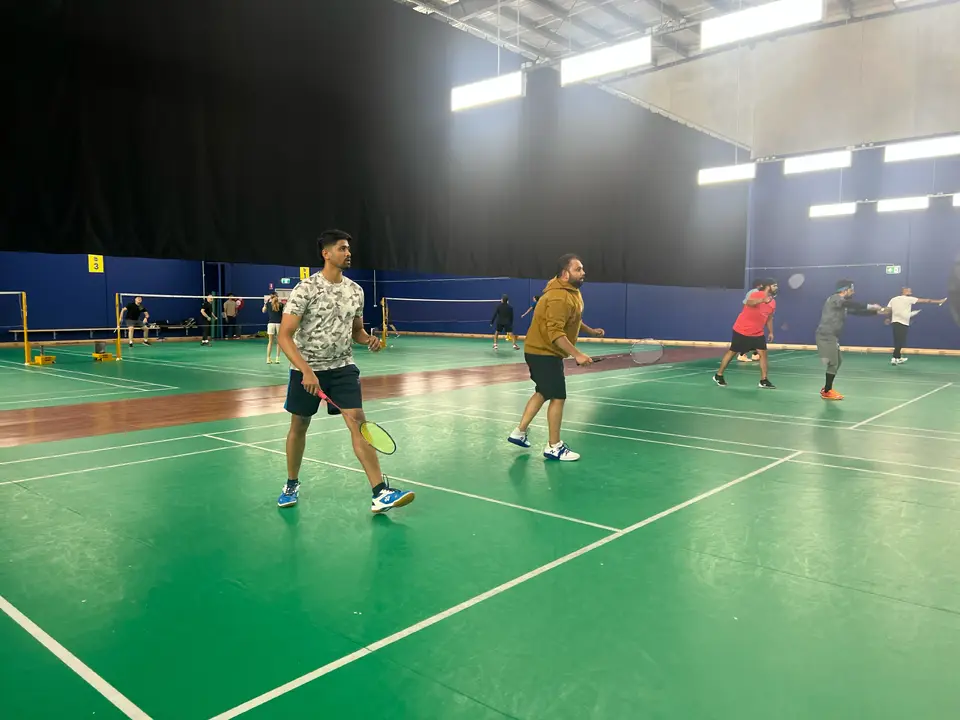
You do not need the most expensive shoes to enjoy a social badminton session. You do need footwear that meets the venue’s rules, fits securely and feels comfortable when you move sideways as well as forwards.
For men and women, start with the same priorities: court suitability, fit, width and controlled movement. A colour, a professional player’s endorsement or a familiar size number cannot tell you whether a shoe suits your feet.
Start with the court, not the colour.
Indoor badminton asks more of a shoe than a straight-line walk.
Badminton involves stopping, changing direction and moving sideways. Look for footwear intended for badminton or appropriate indoor court use, with a secure upper, useful grip and a stable feel during lateral movement. ASICS’ badminton footwear guide discusses grip, cushioning and a relatively low sole profile.
Running shoes are designed for a different activity; a comfortable running shoe is not automatically a suitable badminton shoe. Equally, “court” in a product name is not enough—check the intended sport, sole and venue requirements.
“Non-marking” describes the sole’s suitability for the floor, not a guarantee of grip. Keep soles clean and check the court surface before playing.
Choose secure, not squeezed.
Check both length and width.
Try both shoes with the socks you intend to wear for badminton. Lace them normally rather than tightening them excessively to compensate for a poor fit.
- At the toes: leave comfortable room rather than allowing toes to press into the front when you step forward.
- Across the forefoot: avoid a pinched feeling or obvious bulging over the sides. A longer shoe is not always the answer to a width problem.
- At the heel: look for a secure hold without excessive slipping when you walk or make a gentle court-style movement.
- Over the top: the upper and laces should feel secure without uncomfortable pressure.
ASICS’ size and fit guide distinguishes length from width and notes that forefoot bulging can indicate a need for more width. Width availability and labels vary by brand and model, so ask for the relevant chart.
Men’s, women’s or unisex? Compare the actual fit.
The label is a starting point, not a fitting result.
Men’s and women’s ranges can use different size scales and standard widths. ASICS, for example, lists different standard widths for its men’s and women’s shoes. That is brand-specific guidance, not a universal conversion rule.
If a shoe from another range fits your foot better, compare its length, width and intended court use rather than ruling it out by label. Do not transfer a US size number unchanged between men’s and women’s ranges; use the manufacturer’s conversion chart and try the actual pair.
For unisex shoes, check which scale the retailer displays and whether alternative widths exist. If shopping online, confirm the returns policy before wearing the shoes on court.
Use a short, gentle try-on routine.
WBi’s checklist for comparing two or three suitable pairs.
- Bring your playing socks. If you normally use an insole, bring it and ask whether the shoe accommodates it.
- Try both feet. Do not judge the pair from one shoe while seated. Stand and walk on the retailer’s permitted test surface.
- Add controlled movement. If allowed, make a few gentle side steps and a small forward step. Check whether your foot slides inside or your toes meet the front.
- Compare the feel. Notice stability, heel hold and comfort, not just how soft the shoe feels when you first stand in it.
- Check the practical details. Confirm non-marking suitability, size scale, width, intended use and return conditions.
Keep any test modest and within the retailer’s rules. A shoe should not require you to tolerate obvious discomfort in the hope that it will become suitable later.
Buy for your use, then care for the pair.
A sensible purchase does not need to be the latest flagship model.
Set a budget and compare suitable indoor court shoes within it. An entry-level or discounted previous-season model may be worth trying, but a sale is not good value if the fit is wrong. Avoid choosing solely by weight, cushioning claims or the price tag.
Badminton Australia’s participation advice recommends considering court shoes as players develop. WBi’s own non-marking indoor footwear requirement still applies when you attend our sessions.
- Keep court shoes for indoor use where practical. Carry them to the venue instead of bringing outdoor dirt onto the court.
- Clean and dry them as directed. Follow the manufacturer’s care instructions rather than improvising treatments on the sole.
- Inspect before playing. Look for worn-smooth areas, loose soles, damaged uppers or a fit that no longer holds your foot securely.
- Replace by condition, not a fixed calendar. Playing frequency, floor and shoe construction affect wear. There is no single replacement month for every casual player.
No shoe guarantees injury prevention. This is an equipment guide, not an assessment of individual foot or ankle needs.
Can I use running shoes for my first WBi session?
WBi requires non-marking indoor court shoes. Check your pair’s intended use and the club requirements before attending rather than assuming any sports shoe qualifies.
Can women wear men’s court shoes, or men wear women’s?
Potentially, if the actual length, width, heel hold and court suitability work for the wearer. Check the model’s size chart and fit rather than relying on a standard size conversion.
Do casual players need premium shoes?
Not automatically. Prioritise appropriate court use and a comfortable, secure fit. Compare suitable pairs within your budget instead of treating the most expensive option as the default.
Are all non-marking shoes badminton shoes?
No. Non-marking is one floor-related property. Also check the intended activity, fit and how the shoe feels during controlled sideways movement.
Sources & further reading
References checked on 18 October 2026. The try-on checklist is a WBi editorial suggestion. Manufacturer links explain selection principles; this article does not rank specific models or endorse the shoes pictured. Product ranges and sizing vary by market.