The basics of
badminton stringing.
Know your racket. Understand your restring.
There’s more to a fresh string bed than choosing a number.
By Western Badminton ·
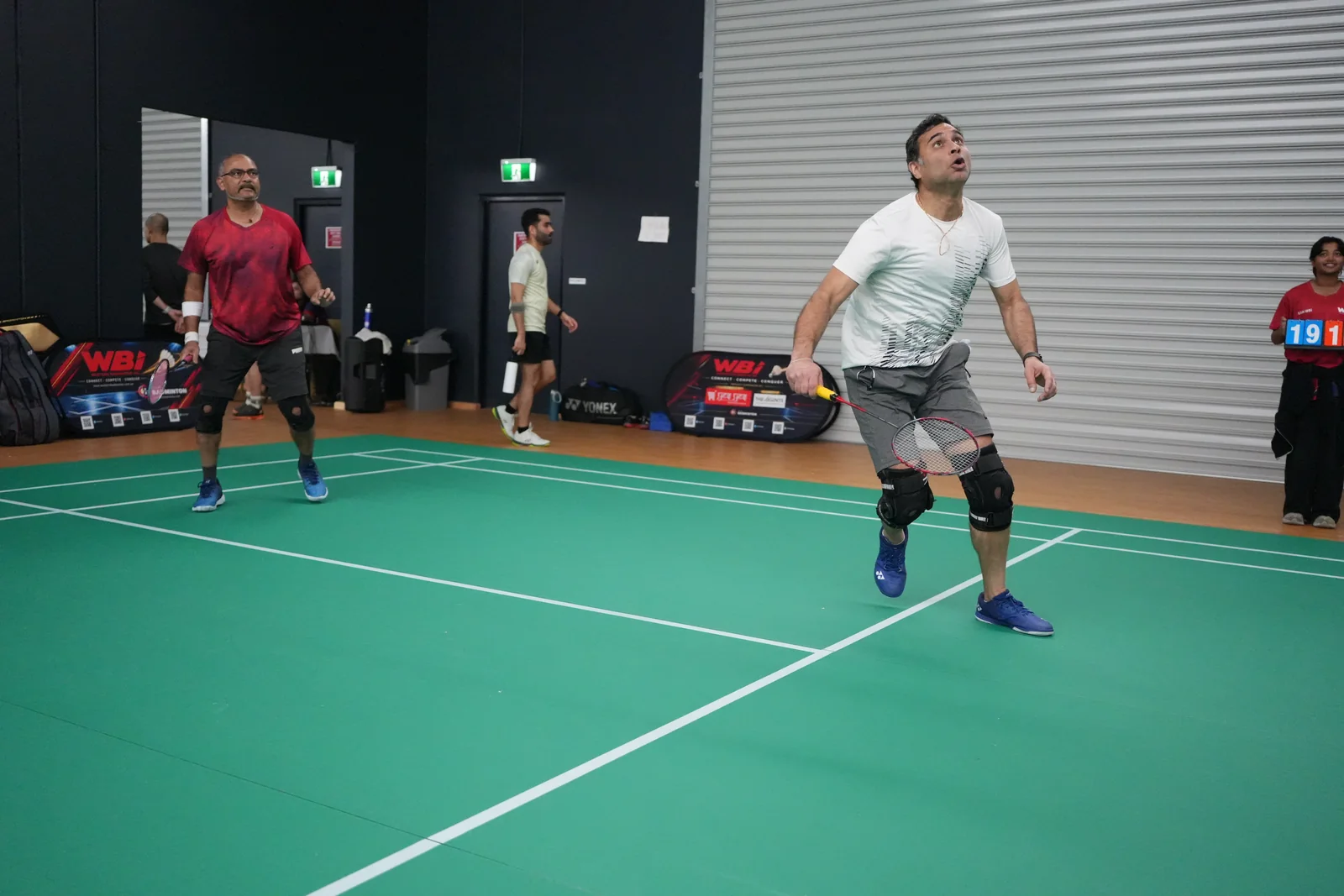
Badminton stringing is the process of fitting strings into a racket’s frame and tensioning them to create the hitting surface. Whether you have broken a string or are booking your first restring, understanding a few basics makes the conversation with your stringer much easier.
This is a player’s introduction—not a hole-by-hole stringing tutorial. For help choosing a string or tension, read our companion guide to badminton strings and tension.
Your exact racket comes first. Use its manufacturer’s recommended tension range and stringing pattern. If you want to learn hands-on stringing, start with appropriate instruction and a badminton-compatible machine.
A few words you’ll hear.
You don’t need a technician’s vocabulary. Start with the parts you can see.
The lengthwise strings
These run along the racket head, from the top towards the shaft.
The strings across them
These run side to side, weaving over and under the mains to form the string bed.
The supporting structure
The racket head holds the strings. Its condition matters before any restring.
Grommets: small parts with an important job
Grommets are the protective inserts around the frame’s string holes. A worn insert can leave a string vulnerable to damage. Yonex’s equipment-care guidance specifically recommends checking grommets for wear, as well as checking the racket for damage.
Gauge and tension are different measurements
Gauge describes string thickness, usually in millimetres. Tension describes the pulling force used during stringing, commonly quoted in pounds or kilograms. Neither number, by itself, tells you whether a setup will suit you.
Tie-off points are the designated places where string ends are secured with knots. Their positions, along with the string route, belong to the racket’s specified pattern—not a universal template.
What happens during a restring?
Think of it as an equipment service, not simply threading a new string through the holes.
- Inspect and agree. The stringer checks the frame and grommets, identifies the exact racket model and agrees on the string and tension with you. Existing damage may mean the racket should not be restrung.
- Prepare and support. Old strings are removed appropriately, worn grommets are addressed, and the racket is supported on the machine. Correct mounting is part of protecting the frame during the job.
- String to the correct pattern. Mains and crosses are installed and tensioned using the machine and clamps. The pattern determines the route and tie-off locations. Yonex’s published patterns, for example, differ between racket models.
- Finish and check. The stringer secures the ends, checks the completed string bed and frame, and records the setup so you can refer to it next time.
Make your next visit simple.
WBi’s suggested checklist for a clear conversation at the counter.
- Bring your racket and its history. Mention collisions, visible damage and where a string broke.
- Describe your current setup. Share the string name, tension and last restring date if you know them. “I’m not sure” is a perfectly useful answer too.
- Explain what you want. Tell the stringer about your playing frequency, budget and what you liked or disliked about the previous feel.
- Confirm the full quote. Ask whether it includes string, labour and any necessary grommet replacements, and agree on collection time.
- Keep the details. Record the string, tension, date and stringer. After a few familiar sessions, note what felt different.
You do not have to request a higher tension to get a worthwhile service. A dependable, repeatable setup is a useful starting point.
Look after the whole racket.
Strings are one part of the equipment you take on court.
Before playing, look for frame cracks, worn grommets and damaged strings. Don’t play with a damaged frame or assume new strings will make it sound again.
If a string breaks, stop using the racket and arrange prompt help from a stringer. Yonex’s badminton care instructions advise prompt removal of broken strings because the remaining tension can become unbalanced. If you are unfamiliar with safe removal, ask your stringer for guidance rather than improvising.
The same guidance warns against exceeding the recommended tension or leaving a racket in high heat, such as a hot car. Store your racket carefully and avoid loading heavy items on top of it.
Before your first restring.
A few common questions, without the jargon.
Can I restring a racket at home?
Yes, with suitable equipment, instruction and practice. It is a technical skill, not a hand-tightening job. If you only want a reliable playing setup, using an experienced badminton stringer is the simpler starting point.
Does a broken string always mean poor stringing?
No single cause can be identified from a break alone. Bring the racket in for inspection and explain when and where it happened. In particular, worn grommets can damage strings; guessing a cause may miss an equipment problem.
How often should I book a restring?
There isn’t one calendar that suits every player. Discuss visible wear, changes in feel and your playing frequency with your stringer. Keep a record of your setups rather than replacing them solely because someone else follows a fixed schedule.
Will a new string bed fix my technique?
It can change how your racket feels, but it doesn’t replace timing, footwork or practice. Try the setup in familiar conditions and give yourself time to judge it before making another change.
Sources & further reading
Manufacturer references checked on 17 October 2026. The appointment checklist and player suggestions are WBi editorial guidance, not a substitute for model-specific instructions.
- Yonex badminton stringing instructions — model-specific patterns.
- Yonex product safety — frame and grommet checks.
- Yonex badminton care guidance (Japanese) — recommended tension, storage and broken strings.
- Yonex Precision 5.2 overview — an example of stringing equipment.