How to avoid injuries
while playing badminton.
Prepare well. Listen early. Keep enjoying the game.
Everyday habits that can help reduce your risk on court.
By Western Badminton ·
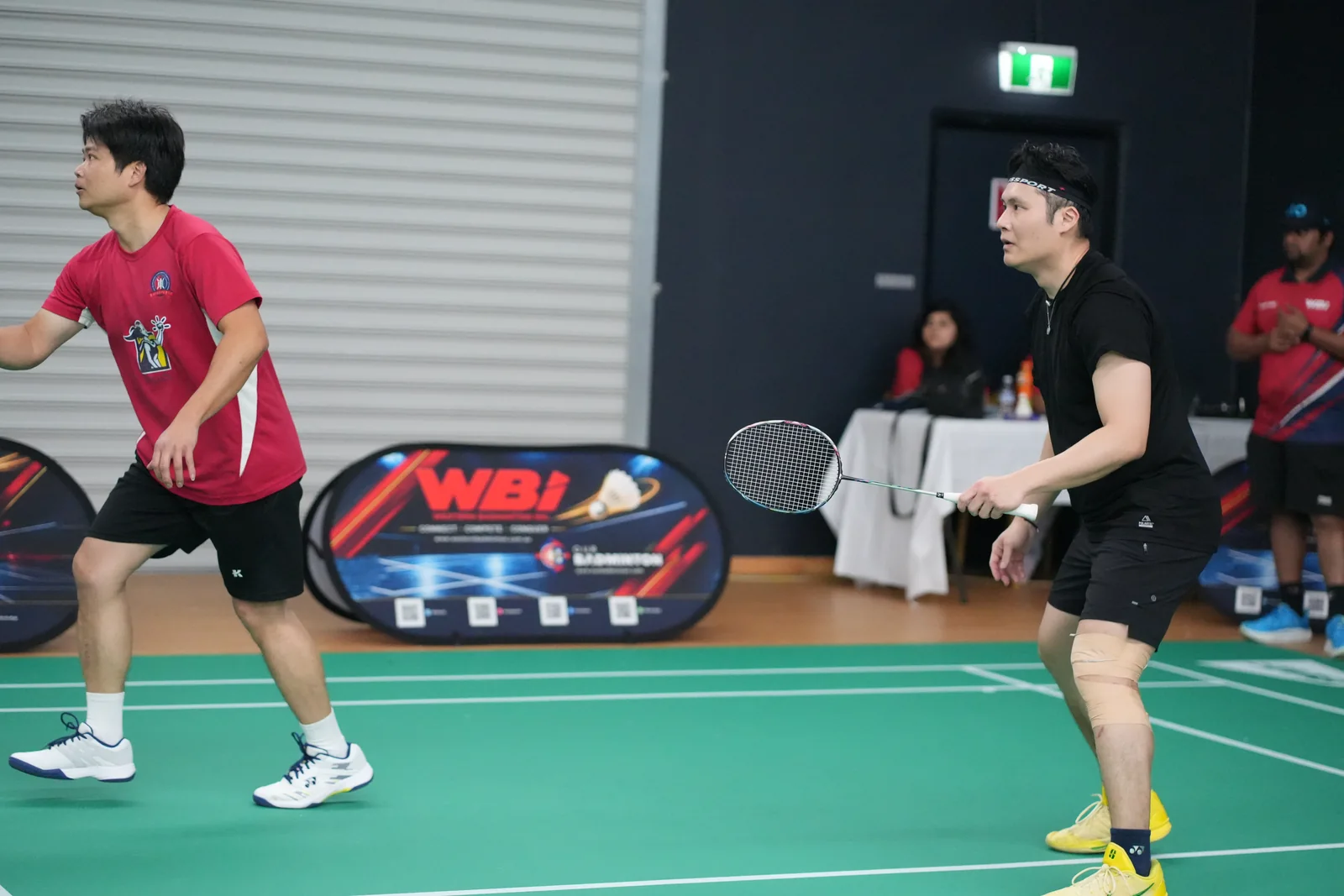
Badminton brings quick changes of direction, lunges and overhead shots. A little preparation can help you enjoy those movements with fewer avoidable risks. No routine can prevent every injury, but sensible habits give you a better starting point.
This guide brings together general sports-health advice and practical suggestions for a social badminton session. If you have an existing injury, recurring pain or a health condition that affects exercise, get individual advice from a doctor or physiotherapist before changing your activity.
Give your body time to get ready.
Start gently and work towards the movements you will use in the game.
The NHS warm-up guide recommends at least six minutes, with longer if needed. Use that as a starting point rather than a countdown to maximum effort.
- Get moving. Begin with comfortable walking or marching, gradually increasing your pace.
- Move through comfortable ranges. Add gentle shoulder rolls and controlled movements of your arms and legs.
- Rehearse badminton slowly. Try short steps and shallow, comfortable lunges, then easy racket swings. Stay within movements you already know.
- Build into the rally. Start with gentle exchanges before adding speed or harder overhead shots.
The badminton sequence is WBi’s practical adaptation, not a tested injury-prevention programme. Stop any warm-up movement that causes pain or makes you feel unwell.
Make the playing space work for you.
A quick check is useful before the first serve and between games.
- Wear suitable court shoes. Choose well-fitting footwear intended for indoor court movement, with sound grip and secure laces. Follow the venue’s non-marking shoe requirements.
- Check the surface. Report wet or slippery patches. Keep bags and bottles off the court, and collect loose shuttles when play has stopped.
- Check your racket. Make sure the grip is secure and the frame is undamaged. Equipment should be comfortable to use and in good condition.
- Make room for others. Wait for a rally to finish before crossing behind players. Agree with your doubles partner how you will call for the shuttle.
Victoria’s Better Health Channel recommends appropriate, maintained equipment and advice on safe sporting technique. Our court checklist applies those principles to a local session.
Learn the movement before adding speed.
A coach can help with the details that are difficult to judge yourself.
Ask a qualified badminton coach to review your grip, overhead action, lunging, stopping and recovery steps. MedlinePlus recommends learning good form when starting a sport.
At your next practice, choose one skill to work on at a manageable pace. Leave enough space for each player, and pause between repetitions to reset. Build towards quicker movement when you can keep control.
If a shot is out of reach, let the rally go. In doubles, communicate early and leave your partner room to swing. Our footwork story is an introduction; hands-on coaching is the better place to have your own movement checked.
Build a routine you can recover from.
Think about the whole week, including games, drills and strength work.
After time away, begin with shorter, easier sessions. Increase gradually instead of adding more playing days, longer sessions and harder games together. MedlinePlus’s exercise-injury guidance highlights that combination as something to avoid.
Plan recovery time, take breaks when tired and reduce the session if your movement becomes difficult to control. Better Health Channel also recommends recovery days and responding to fatigue. Keep water available, particularly in a warm venue.
General fitness and strength work can complement badminton. If you want a starting point, see our home dumbbell exercise guide and get help learning unfamiliar movements. A physiotherapist or qualified exercise professional can tailor a programme to your needs.
Finish at an easier pace. Avoid treating a cooldown, stretch or new piece of equipment as a guarantee that you can safely play through pain.
Respond early when something hurts.
Stopping a session is a sensible decision.
Stop playing if you develop pain, feel unwell or sustain an injury. Tell the organiser and seek appropriate help. Persistent or recurring symptoms deserve assessment rather than repeated attempts to play through them.
The NHS sprains and strains guidance advises urgent assessment for severe or worsening pain, substantial swelling, or inability to bear weight. A visibly deformed limb, numbness or a cold or discoloured injured area needs emergency assessment.
For chest pain, collapse or severe breathing difficulty, seek emergency help immediately. An eye injury with pain or a change in vision also needs urgent medical assessment.
Return to badminton should depend on your injury, function and professional advice—not simply the next booking in your calendar.
A few common questions.
Useful habits without promises of an injury-free game.
Does stretching alone prevent injuries?
No guarantee can be made. MedlinePlus notes that evidence for stretching itself reducing injury is unclear. Treat flexibility work as one part of your activity, alongside a gradual warm-up, suitable equipment, technique and recovery.
Should I keep playing until the pain warms away?
Stop the activity that hurts. If pain keeps returning, changes how you move or does not settle, get it assessed before continuing. A warm-up is not a test that clears an injury.
How much should I increase my playing time?
There is no single increase that suits every player. Your fitness, recent activity and recovery matter. Change gradually and ask a qualified professional for help if you are returning after injury or a long break.
Sources & further reading
Checked on 17 October 2026. This is general information, not an individual diagnosis or return-to-play plan.