Why warm-up and cooldown matter in casual badminton.
A gentle start. A gradual finish.
Make a little time on either side of the rallies you enjoy.
By Western Badminton ·
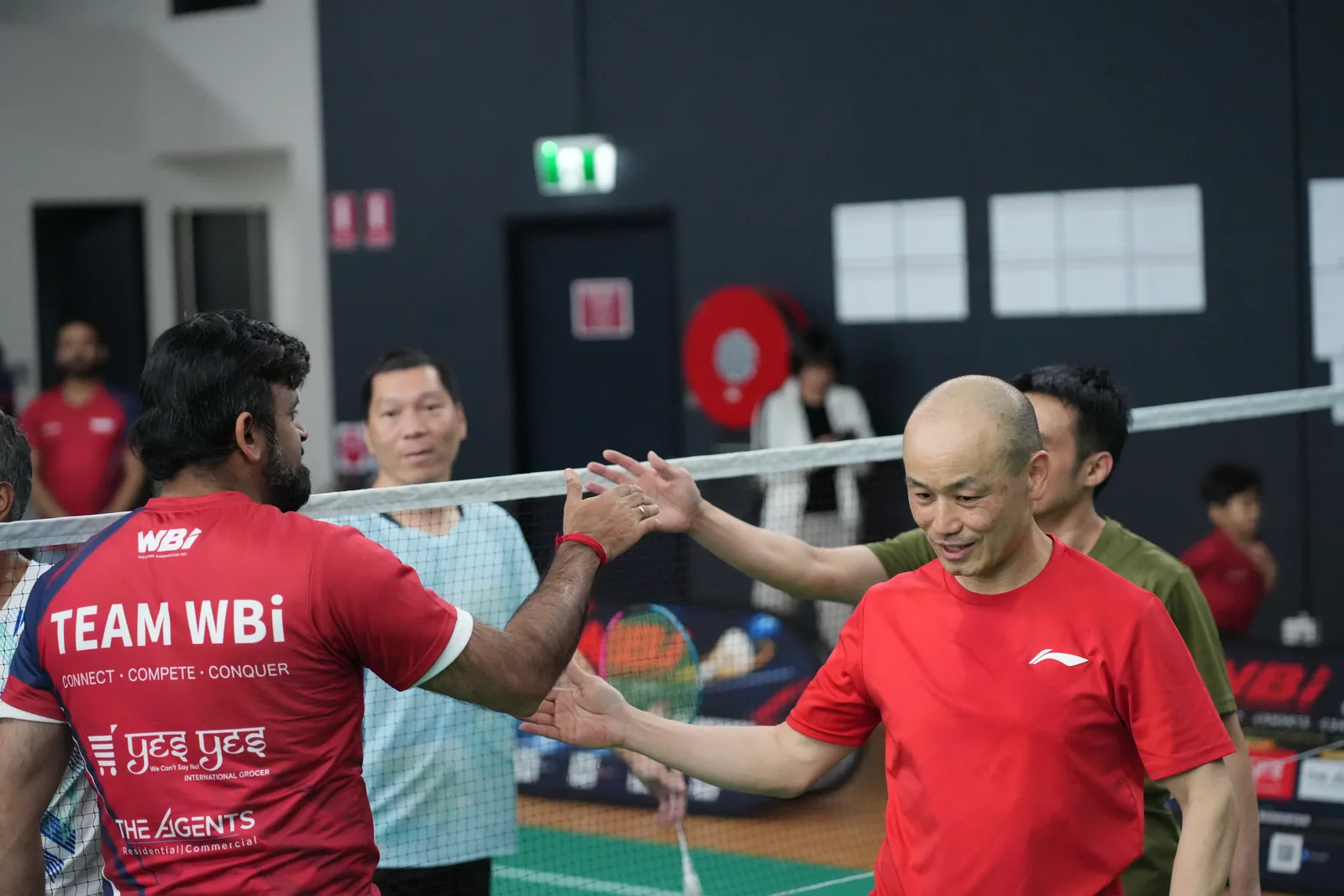
Warm-up and cooldown are worth making time for, even when you play badminton casually. A social game can still involve quick turns, sudden reaches and repeated overhead shots. The score may be friendly; your body still has work to do.
A warm-up gradually prepares you for that activity. A cooldown gradually eases you back towards rest. Neither guarantees an injury-free session, and their benefits should not be confused with promises about next-day soreness.
If you have an injury, a health condition or concerns about exercise, ask a healthcare professional what is suitable for you.
Give your session a beginning and an end.
Different purposes, with a shared emphasis on changing pace gradually.
The American Heart Association explains that warming up allows a gradual rise in heart rate and breathing and raises muscle temperature. Cooling down lets activity decrease gradually; stopping suddenly after hard effort can cause light-headedness.
For badminton, that means building from easy movement towards the stepping and hitting you will use. Afterwards, make the transition out of the game with gentle movement rather than stopping abruptly.
Keep expectations realistic. A research review of active cooldowns found that they generally did not significantly reduce delayed muscle soreness. A cooldown can still be a useful way to finish your session without making that promise.
Start easy. Build towards badminton.
A suggested 6–10 minute sequence for generally healthy casual players.
The NHS warm-up routine takes at least six minutes. Here is WBi’s badminton adaptation; the timings are a starting point, and you may need longer.
- About 2 minutes: get moving. Walk or march at an easy pace, gradually becoming a little more brisk.
- About 2 minutes: add comfortable movement. Try gentle knee lifts, alternating heel digs and shoulder rolls. Keep your balance and avoid forcing a range.
- About 2–6 minutes: ease into court movement. Add controlled short steps, comfortable shallow lunges and easy racket swings. Finish with gentle rallies before increasing pace.
Use a clear space and movements you can control. This should prepare you for the session without tiring you out. Stop if you feel pain or become unwell.
Let the pace come down gradually.
Allow around 5–10 minutes after your final game.
The American Heart Association recommends slowing your walking pace over 5–10 minutes after activity. For a social session, walk gently in a safe area away from ongoing games, gradually easing the pace as your breathing settles.
If you want to include flexibility work afterwards, choose familiar, comfortable stretches while your muscles are warm. Keep them gentle, without bouncing. Ask a qualified professional to show you any stretch you are unsure about.
A cooldown should feel easier than the game. It is not an extra round of sprints or a flexibility challenge, and it is not a treatment for an injury.
Get help if you feel faint or unwell instead of trying to complete the routine. Chest pain, collapse or severe breathing difficulty needs emergency help.
Questions from the social court.
Simple answers to help you prepare with confidence.
Do I need to warm up for a relaxed doubles game?
Yes, it is sensible to prepare even for social play. Match the warm-up to your fitness and the activity ahead. A relaxed game can still involve quick movements, so begin gently and build up.
Does hitting a few shuttles count?
Easy hitting can be the final part of your warm-up. Begin with gentle movement first, then add comfortable court steps and strokes. Going straight into full-power shots skips that gradual build-up.
Will cooling down stop me feeling sore tomorrow?
It cannot guarantee that. The research review linked above found little overall benefit for delayed muscle soreness from active cooldowns. Use your cooldown to ease out of activity; also allow recovery between sessions and build playing time gradually.
What if a stretch or movement hurts?
Stop that movement rather than forcing it. Recurring pain or symptoms that do not settle should be assessed. A warm-up does not clear an existing injury for play.
Sources & further reading
Checked on 17 October 2026. The session examples are WBi editorial suggestions based on general exercise guidance, not a personalised exercise or rehabilitation plan.
Make it part of the social.
Small organising habits make the routine easier to keep.
Minutes to start
Move gently, then build towards your first rallies.
Minutes to finish
Ease your pace after the final game.
Keep it comfortable
Adjust the routine to how you feel and the session ahead.
For a wider look at shoes, playing load and responding to pain, read our badminton injury-risk guide.