How to hold the racket correctly in badminton.
A relaxed hand. A useful starting point.
Learn the basic grips, then let your fingers make the change.
By Western Badminton ·
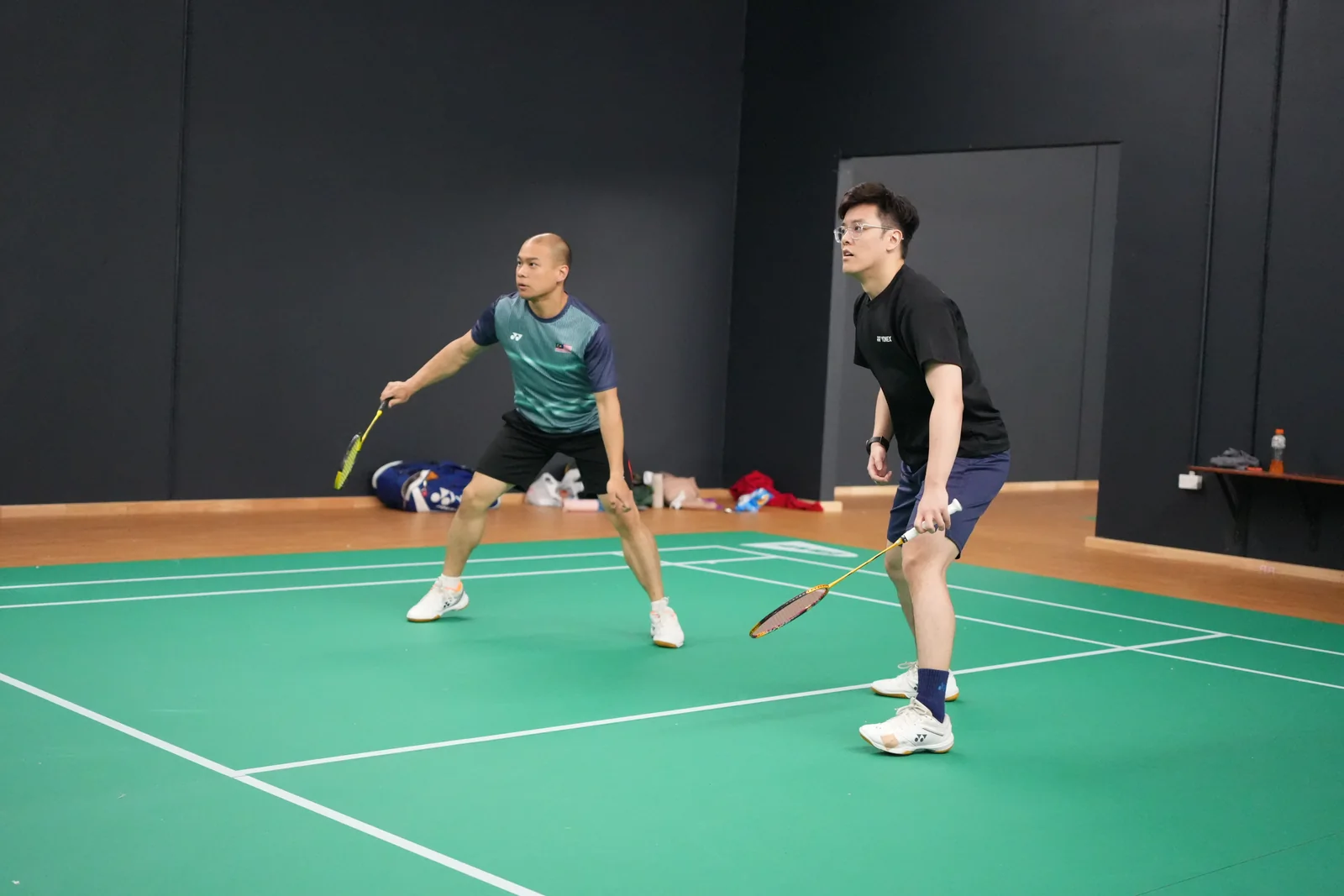
Start with a relaxed, secure hold that lets you adjust the racket in your fingers. Then learn two useful positions: a basic forehand grip and a backhand thumb grip. They are foundations for different shots, rather than one fixed way to hold the racket throughout a rally.
This guide is about where your hand sits on the handle. If you are choosing overgrips, towel grips or replacement grips, see our separate racket grip materials and sizing guide.
Use the steps below alongside the linked demonstrations. A qualified badminton coach can check the angle of your racket face and your finger position in person.
Start with the basic forehand grip.
Often called the basic grip or V-grip.
- Support the racket with your other hand. Hold the shaft so the string bed is upright, with the thin edge of the frame uppermost.
- Offer your playing hand to the handle. Think of a comfortable handshake. Close your fingers around it rather than placing a flat palm behind the strings.
- Look for the V. Your thumb and index finger form a V around the upper part of the handle. Keep the index finger slightly separated from the other fingers.
- Keep it secure and relaxed. Allow small spaces between your fingers instead of clenching them into a tight fist.
Badminton Bible’s forehand demonstration shows the hold and finger position. This grip is a useful starting point for forehand overhead shots.
The BWF Shuttle Time manual’s V-grip illustrations give a closer view of the handle position. Compare your hand with the illustration rather than using the printed logo as a guide.
Turn to a thumb grip for backhands in front.
A helpful position for many backhand net shots, lifts and short serves.
- Loosen your fingers slightly. Keep control of the racket while letting the handle turn in your hand.
- Place the thumb pad on a broad face. The thumb sits behind the handle, broadly along the shaft, ready to support a backhand action.
- Let the other fingers settle naturally. Keep a small space between the handle and your palm. Avoid stretching the thumb rigidly or locking the hand.
Watch Badminton Bible’s thumb-grip demonstration and compare the BWF thumb-grip illustrations.
Let your fingers do the changing.
Learn the movement slowly before trying to make it quick.
The BWF starter lessons teach changing between thumb and V-grips with relaxed, active fingers. Begin with the racket in front of you and gently turn the handle with your fingers; avoid swinging your whole arm just to change the hold.
Between shots, keep enough relaxation to make the next adjustment while still holding the racket securely. A neutral grip is another position a coach may introduce to help you prepare for different replies.
Grips are a range of adjustments, not two rigid settings. Badminton Bible’s grip overview explains how forehand, thumb, panhandle and bevel grips relate to different shots.
Notice the habits that limit the change.
Small checks to bring to your next lesson or practice.
- Clenching all the time. See whether you can move the handle gently in your fingers without losing control. If the hand is locked, reset before hitting.
- Using the same hold for every shot. Practise recognising a forehand contact and a backhand contact in front, then changing before the gentle hit.
- Treating panhandle as an all-purpose grip. It has uses for some forehand shots in front of the body, but is not the usual starting grip for forehand overheads from the rear court.
- Blaming only the grip tape. A secure surface helps you hold the racket, but changing tape does not teach hand position. Check both with a coach.
You do not have to master every grip at once. Aim for a comfortable starting hold and a repeatable change, then build from there.
Try a short, easy practice.
WBi’s suggested sequence for getting familiar with your racket.
- Check without hitting. Find the basic grip, change to the thumb grip, then return. Pause to look at your fingers each time.
- Repeat at a comfortable pace. Keep the racket in front of you and your hand relaxed. Ask a coach or experienced partner to check the position.
- Add gentle contact. With plenty of space, try a few easy forehand and backhand taps. Choose control rather than speed.
- Take one cue into play. During the next relaxed rally, focus on preparing the grip before the shot. Review what felt awkward afterwards.
For structured starter activities, see the grip and grip-change lessons in the Special Olympics badminton coaching guide.
Does this work for left-handed players?
Yes. Use your left hand as the playing hand and mirror the orientation. Your thumb and index finger still form the V, and your thumb still supports the appropriate backhand grip. Ask for a left-handed demonstration if mirroring a picture is confusing.
How tightly should I hold the handle?
Securely enough to control the racket, with enough relaxation to adjust it. You should not need to clench throughout the rally. A coach can help you judge finger pressure for the particular stroke.
Should I choose a thicker grip to fix my technique?
Choose a handle covering that feels secure and comfortable, but learn the hand position separately. Our grip materials guide explains the equipment choices.
Demonstrations & further reading
References checked on 17 October 2026. The practice sequence is a WBi editorial suggestion. A coach can adapt the details to your hand, racket and shot.