Playing doubles with players above and below your skill level.
Different experience. A shared game.
Make room for improvement without losing the enjoyment of playing together.
By Western Badminton ·
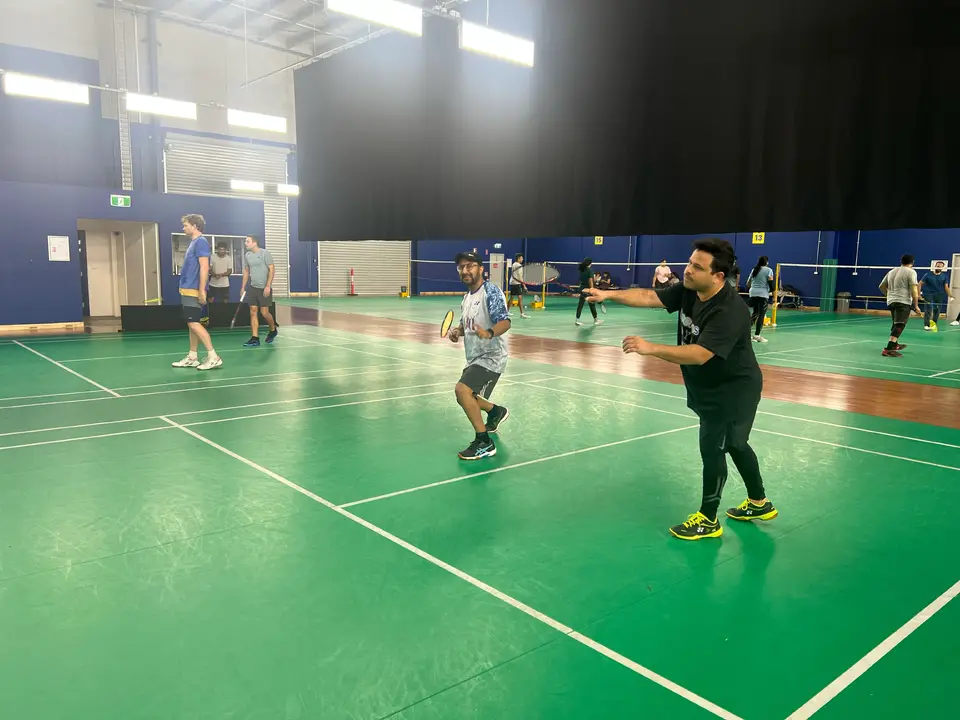
Some nights you are learning from a more experienced partner. On others, you are helping someone find their confidence. Both can be worthwhile games when everyone understands the aim.
Different skill levels do not have to mean one player takes every shot and another barely touches the shuttle. Start with a short conversation, share the court clearly and choose a challenge that suits the session.
Agree what everyone wants from the game.
A warm-up, a practice rally and a competitive match have different aims.
Before starting, ask whether this is a relaxed social game, focused practice or a competitive match. A player who wants a hard contest and someone trying their first doubles game may need different court groupings.
UK Coaching’s inclusion guide encourages understanding individual needs and adapting activities so people can take part with an appropriate challenge. For a social badminton group, that begins with listening rather than assuming what someone can or wants to do.
Experience is not one single score. A partner might be comfortable at the net but still learning rear-court movement. Discuss the parts of the game, rather than labelling the person.
When your partner is above your level.
Contribute clearly instead of trying to impress.
- Keep your first plan simple. Aim for a controlled serve, a playable return and a clear recovery position. You do not need a spectacular winner to be useful.
- Ask about coverage. “Where should I cover when you attack?” is more helpful than silently expecting your partner to take everything.
- Stay involved after your shot. Watch the rally and prepare for your next responsibility rather than stopping to apologise.
- Ask for one cue. Between rallies, request a single practical suggestion if you want feedback. Save a detailed technique discussion for practice.
Accept mistakes as part of the game. A quick acknowledgement is enough; reset and focus on the next rally. Thank your partner for a useful tip without feeling you must master it immediately.
When your partner is below your level.
Support their involvement without taking over.
Covering every shuttle may win a few points, but it can also make your partner unsure which shots they are allowed to play. Agree responsibilities and leave room for them to act.
- Offer feedback, do not impose it. Ask “Would one tip help?” before giving advice. Avoid a running commentary after every miss.
- Choose a useful personal challenge. In an agreed practice game, work on placement, a consistent serve or building a rally rather than maximum power.
- Keep the pair connected. Adapt to the rally rather than permanently parking your partner at the net or asking them to cover an unrealistic area.
- Use neutral language. Discuss a gap or a shot choice, not someone’s worth as a player. Notice good decisions as well as winning shots.
Badminton Bible’s positioning guide explains the complementary areas partners cover in attack and defence. Our casual doubles movement guide adds simple court diagrams.
When the opponents have different experience.
Be clear about competition and considerate about safety.
Against stronger opponents, choose one manageable goal: return the serve consistently, communicate earlier or recover into a useful position. Review the rally that worked, not just the final score.
Against less experienced opponents in a social game, offer a warm-up and ask whether they want a competitive game or a gentler practice format. Do not assume they want you to give away points or disguise your intentions.
In a competitive match, normal tactical placement is part of play. In a social learning game, repeatedly directing every shot at one novice may defeat the agreed aim of giving everyone a useful rally. If the gap remains too large, ask the organiser to adjust the pairing or court.
Adjust the session, not someone’s dignity.
WBi suggestions to try with everyone’s agreement.
- Start with a cooperative rally. Try keeping the shuttle in play together before adding score pressure.
- Change partners between games. If the organiser’s rotation allows, mix the combinations so nobody is always carrying a pair or always feeling outmatched.
- Use a practice constraint. For example, agree to avoid smashes for one practice game while working on placement. Make the change explicit and apply it as agreed.
- Review the balance. Ask whether everyone had a fair chance to participate and an appropriate challenge. Use level-matched courts for part of the session when needed.
These are optional social-practice ideas, not official rule changes. Follow the event format during a tournament or organised competition.
Badminton Australia’s club-support resources highlight welcoming and inclusive participation. At WBi, our aim is a session where players can enjoy the game, improve and come back feeling they belong.
Should I always pair the strongest player with the least experienced?
Not automatically. It may balance some games, but preferences, movement, confidence and the size of the gap also matter. Ask the organiser to review how the games actually feel.
Do I have to give advice because I am more experienced?
No. Being a supportive partner can simply mean clear calls, patience and respectful play. Ask before coaching, and suggest a qualified coach for detailed technique work.
Is it okay to ask for games nearer my level?
Yes. Explain that you would like an appropriate challenge without dismissing anyone else. A session can include both mixed-experience social games and level-matched games.
Sources & further reading
References checked on 18 October 2026. The conversations, personal goals and practice formats above are WBi editorial suggestions, not prescribed rules or a guarantee of balanced games.