Why Do Badminton Strings Keep Breaking in the Same Place?
Find the pattern before your next restring.
A recurring break gives you a place to start looking. Check the exact location, the racket’s condition and what happened during play.
By Western Badminton ·
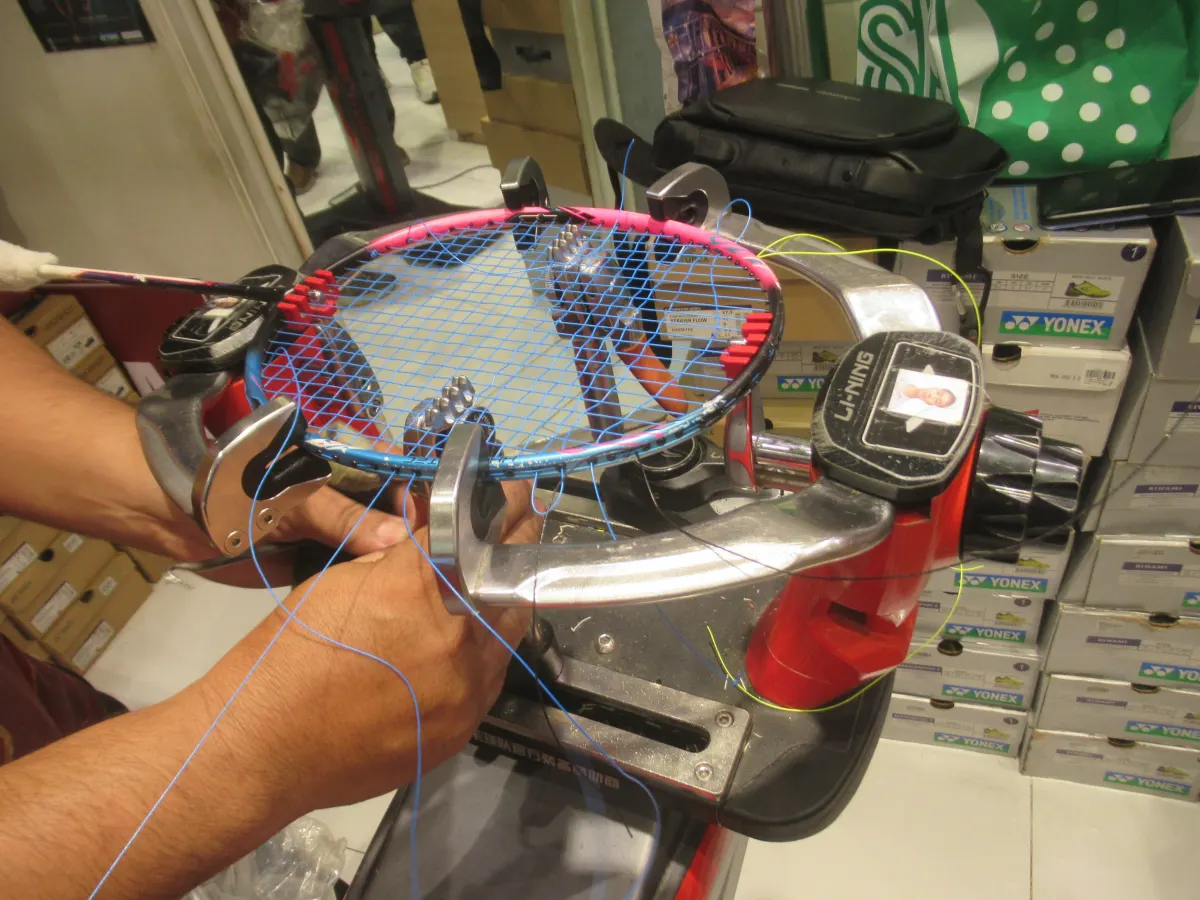
Start with the exact break location
“The top of the racket” can mean several different things. Before the strings are removed, note whether the break is at a string crossing, next to the rim, inside a frame hole or beside a knot. Check whether successive breaks really happened at the same hole or simply in the same general area.
With the handle pointing down, describe the location as if the racket head were a clock. A note such as “near 11 o’clock, where a main string enters the frame” is more useful than “it snapped again”. Mains run along the length of the racket head; crosses run across it.
| Where it breaks | What to ask about | What to record |
|---|---|---|
| At the same frame hole | Grommet condition, string protection and the surrounding frame | Clock position and a close photograph |
| Near the top or bottom rim | Off-centre contact, grommets and the string path | The shot you were playing and any frame contact |
| At a central crossing | Repeated abrasion and visible notching | Hours played and any thinning before the break |
| Beside a knot | Tie-off position, grommet support and installation | How soon after restringing it happened |
| At changing locations | Overall wear, contact consistency and setup suitability | String model, tension and playing history |
Use this table to organise your observations. Several causes can produce a similar-looking break, and the loose ends can move after it snaps. Avoid pulling the strings back into position just to recreate the scene.
Repeated breaks at a frame hole deserve a grommet check
Grommets are the small protective sleeves where strings pass through the racket frame. A stringer can inspect whether a sleeve is worn, split, missing or sitting poorly. Yonex’s safety guidance specifically identifies worn grommets as a cause of string damage and easier breakage. Yonex product safety guidance
Ask the stringer to inspect the exact hole involved and the neighbouring holes before fitting fresh string. Mention whether the same location has failed after more than one restring, including jobs done with different strings.
What to ask before replacing a grommet
- Does this hole have the correct protective sleeve for this racket?
- Is its condition suitable for another restring?
- Does the surrounding frame show damage or an unusual edge?
- Are other grommets also worn enough to need attention?
Have the stringer choose compatible replacements and inspect the frame underneath. Avoid trying to drill, file or enlarge a hole yourself. If a sleeve keeps failing, ask for the underlying reason to be checked before repeating the same repair.
When the frame needs assessment
Tell the stringer about racket clashes, floor contact and any visible change in shape. A damaged frame needs assessment before another restring. Yonex advises checking the frame and shaft for cracks and other irregularities before use. Yonex inspection advice
Look at contact location and gradual string wear
Breaks near the rim after a mishit
If the string snapped while you were reaching late for an overhead, defending a fast drive or hitting close to the frame, include that detail. NZ Badminton Center identifies contact near the top or bottom of the string bed as a mishit-related breakage pattern. That makes the shot history useful alongside an equipment inspection. NZ Badminton Center’s stringing guidance
For casual players, a practical next step is to ask a coach to watch a few controlled clears or drives. Explain that you want help finding a comfortable contact point and arriving in position. If you only notice the break during rushed rallies, record that pattern too.
Breaks in the usual hitting area
Look for the history of the string bed. Had you noticed grooves where the strings cross, visible fraying or a thinner-looking section? Did it last many sessions before failing? Those observations help a stringer consider wear alongside other causes.
Count approximate hours on court as well as calendar weeks. A player training several evenings a week and someone playing occasional socials put very different use into “one month”. No fixed number of sessions guarantees that a string should still be intact.
Review tension, string choice and installation together
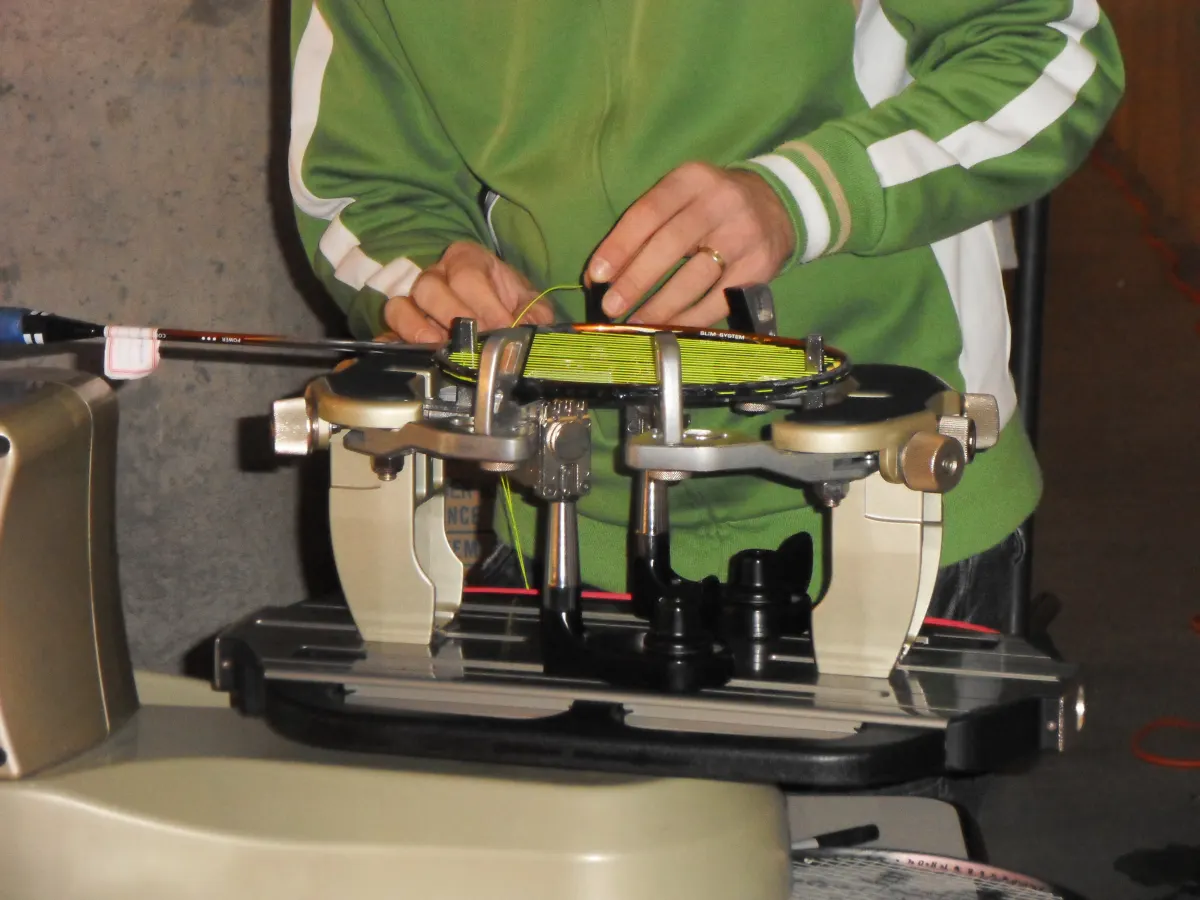

Bring the actual setup details
Record the racket model, string name, gauge and requested tension. If you are unsure, ask the shop to look up its previous job record. A recommendation that only says “try a stronger string” leaves several useful questions unanswered.
Discuss whether the current tension suits your playing needs and the exact racket’s recommended range. The frame’s maximum rating alone does not establish the right setting for a particular player. Ask your stringer to explain any proposed change and what you should notice on court.
Gauge is one part of durability
If durability matters most, ask about strings designed for that purpose. Construction matters alongside diameter. For example, Yonex describes BG65’s 0.70 mm braided fibre in terms of abrasion durability. That product description provides a discussion point, rather than a lifespan prediction for your racket. Yonex BG65 specifications
Compare string options with your budget, preferred feel and frequency of play. For a suspected problem at one hole, have that area inspected before expecting a string change to resolve it. Our guide to choosing strings and tension explains the broader setup choices.
Early breaks and breaks beside knots
Contact the original stringer promptly if the fresh restring fails early. Ask them to review the tie-off holes, string path, grommet support and installation record. They can consider whether a string was damaged during installation, whether an impact occurred during play or whether further frame inspection is needed.
Bring the timing, photographs and receipt if available. Ask about the shop’s assessment process before paying for another job. Warranty and replacement decisions depend on its findings and the relevant terms.
Manufacturers publish model-specific instructions covering stringing patterns. Ask whether the appropriate pattern was followed for your racket. Yonex stringing instructions
Make the next restring a useful comparison
A short record helps you and the stringer evaluate what changed. You can keep the following checklist in your phone.
- Before the visit, photograph the whole string bed and the break location if safe. Note the shot, approximate playing hours and any recent clash.
- At inspection, show the recurring location and ask for the grommets and frame to be checked before restringing. Ask what was found.
- Agree the work, including any grommet replacements, the string model and gauge, requested tension, price and expected completion date.
- Keep the receipt or job note, so you can identify the setup if the problem recurs.
- After returning to play, note approximate hours and any break location. Where practical, agree one setup change at a time so the comparison is easier to interpret.
You could tell the shop, “This racket has broken near the same upper frame hole after its last two restrings. Could you inspect that hole and the frame, record any grommet work and help me choose a suitable setup?” This is a suggested conversation, rather than a report of a WBi member’s experience.
What to do when it snaps again
Put the racket aside and use a sound spare. Arrange prompt, safe release of the remaining string bed with an experienced stringer, following the racket maker’s guidance. Read our courtside guide to a broken racket string for the immediate steps.
Between sessions, protect the racket from heavy loads and prolonged heat. Use our equipment-care checklist to make string, grip and frame checks part of packing your bag.
Common questions about repeated string breaks
Why does my string keep breaking at the top of the racket?
Ask a stringer to inspect the nearby grommets, frame and string path. Mention whether the break followed contact close to the rim and how long the string had been used. These details help narrow the possibilities.
Will a thicker string solve the problem?
It may be worth discussing a durability-focused string, but the choice depends on its construction and your setup. An inspection of a recurring break at one hole is still needed.
Should I lower the tension?
Discuss an appropriate setting with your stringer, within your exact model’s recommended range. Explain how the current setup feels and where it breaks before agreeing a change.
Can a brand-new racket have a grommet problem?
If the same location fails on a new racket, ask the retailer or stringer to inspect it and keep the purchase and restring records. The age of a racket alone cannot establish the cause.
Can I replace only the broken string?
Arrange a full assessment and suitable restring with an experienced badminton stringer. Tying or patching the broken strand does not address the recurring cause.
How long should badminton strings last?
There is no universal lifespan. Keep a record of hours played, string choice, tension and break location. That gives the stringer a more useful history than the number of weeks since purchase.
Sources and further reading
Sources checked on . Manufacturer and stringing-service guidance informs the equipment checks above. The observation table and visit checklist are WBi editorial aids for a conversation with your stringer. A racket inspection is needed to establish the cause of an individual break.